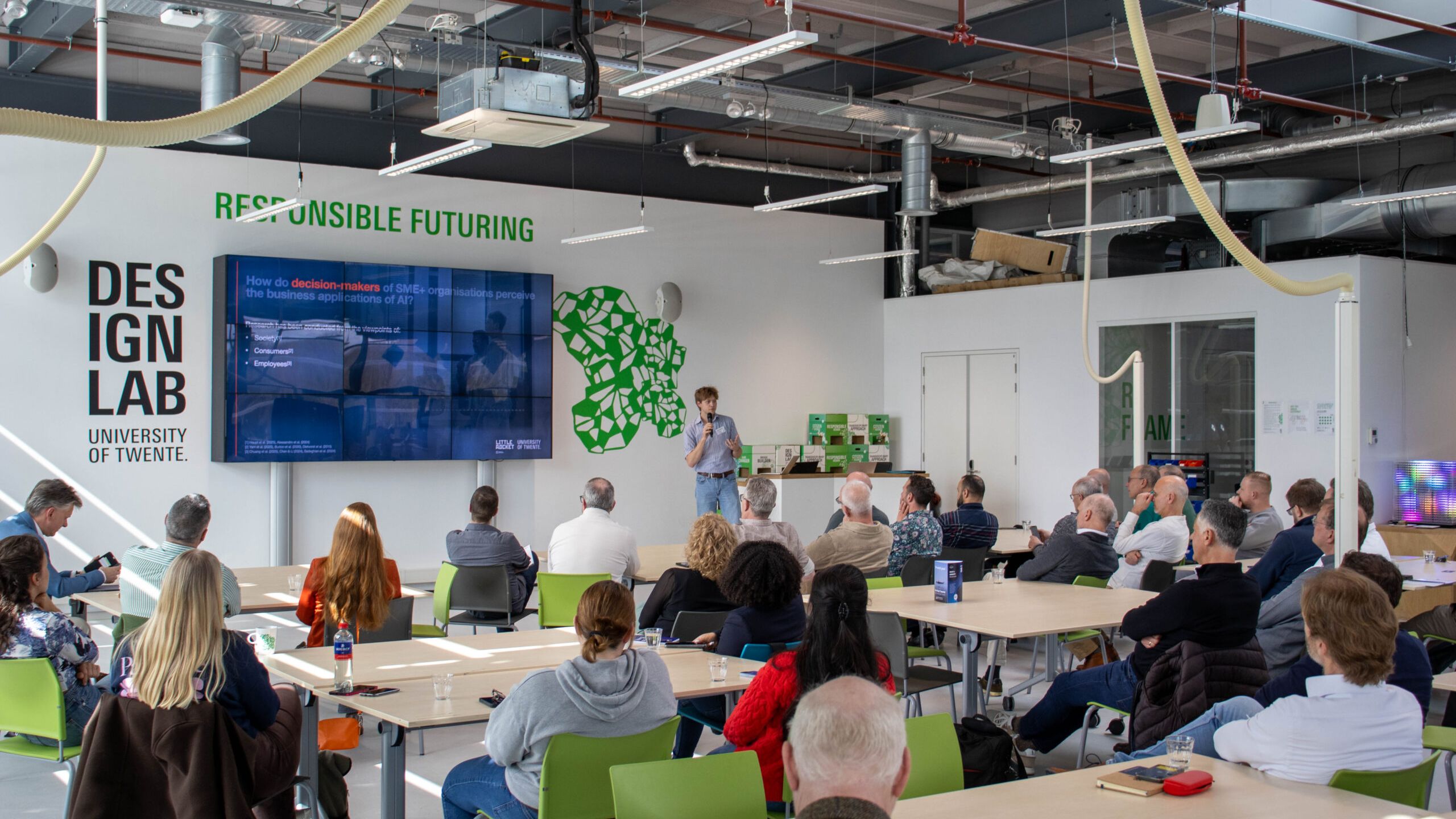
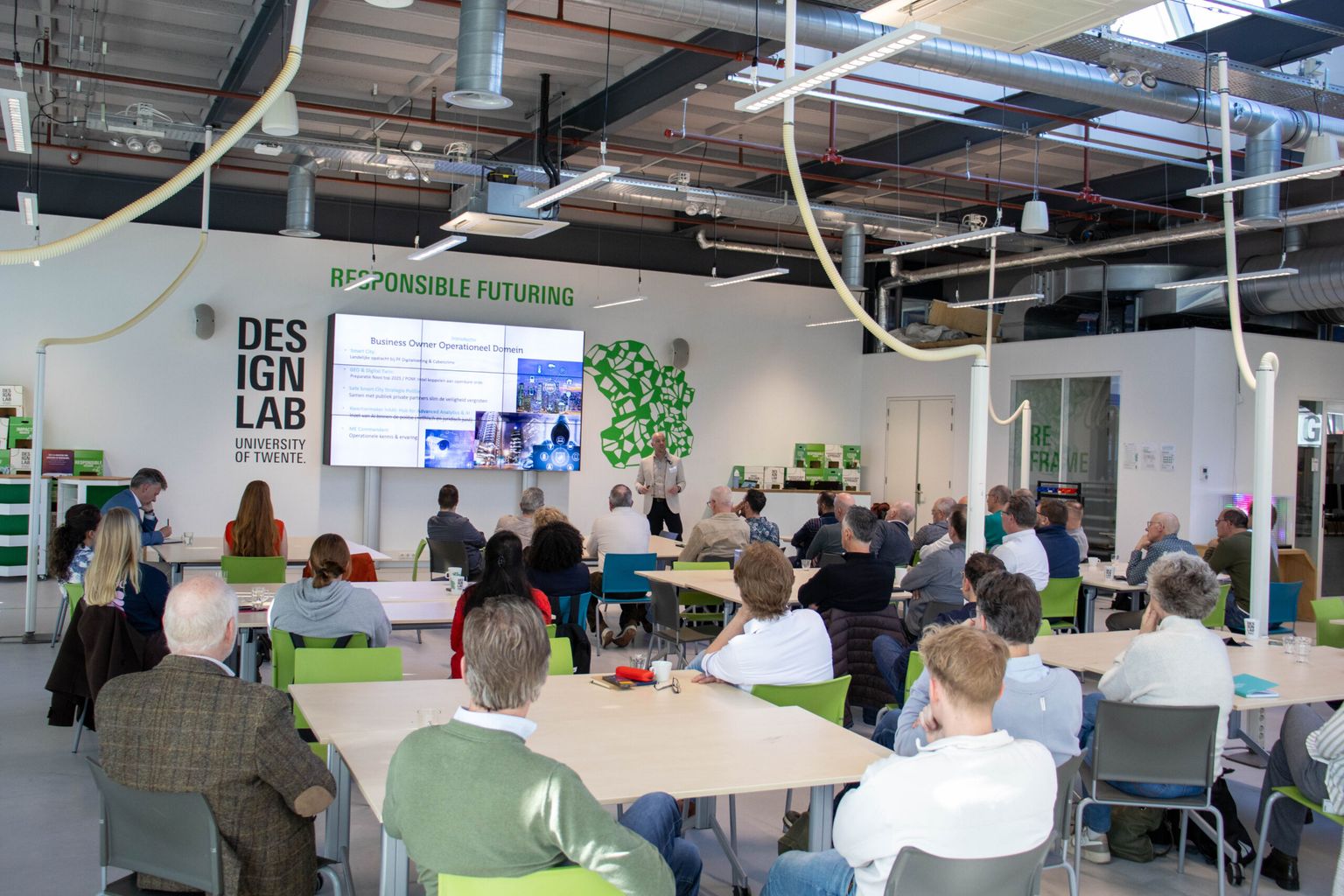
Last month, the fifth Technical Communication Day took place at the DesignLab of the University of Twente. The event was organized by our own Maaike Otten, Shannen Bergsma from Eluxis, and Joyce Karreman from the University of Twente. This edition focused on innovation and the ongoing development of technical communication across various sectors. Six speakers shared their insights on current and relevant topics within the field of technical communication.
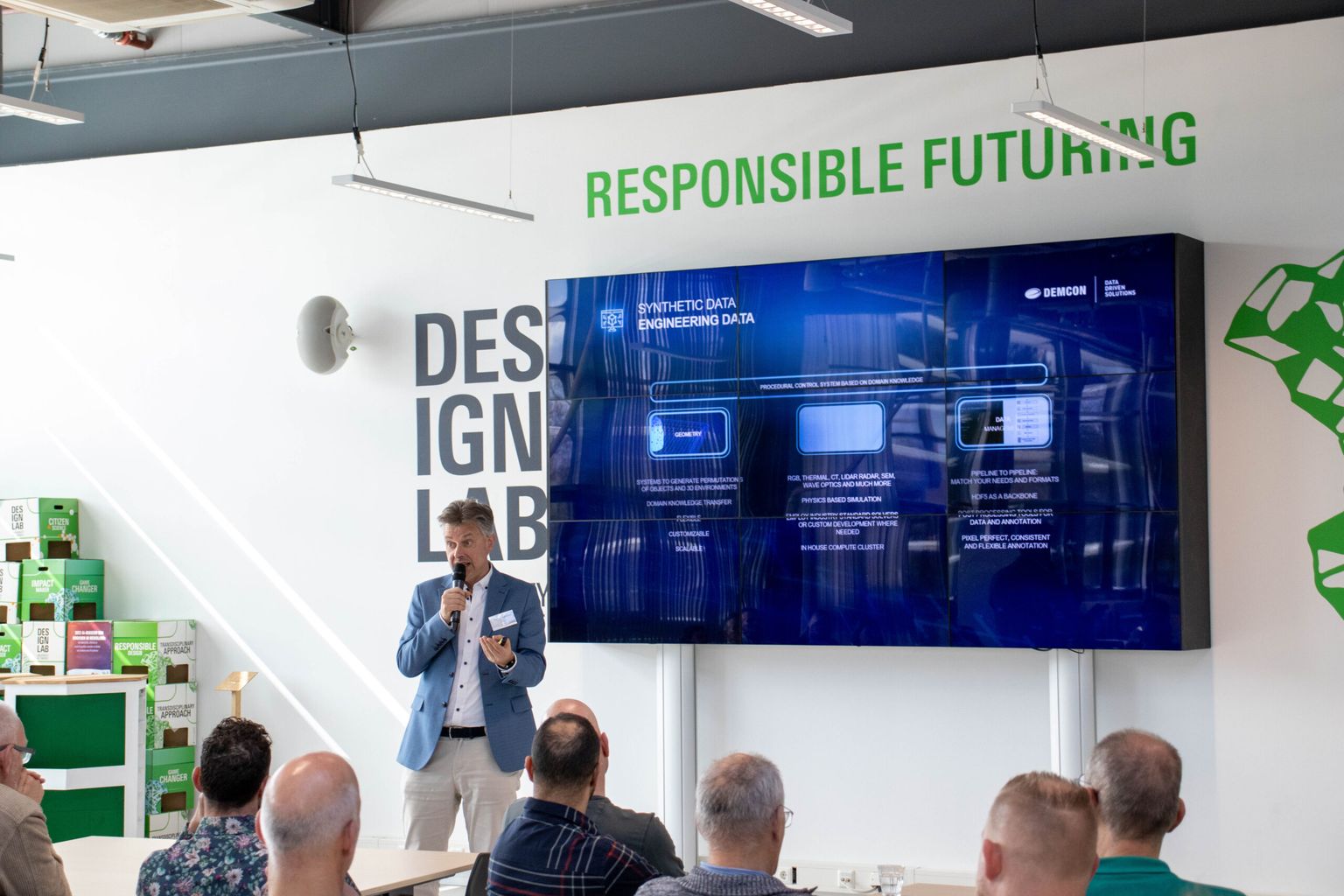
The role of AI in the creation of synthetic data
Marnix Zoutenbier opened the day with a presentation on synthetic data at Demcon Data Driven Solutions (DDDS). At DDDS, engineers work with AI on a daily basis to generate synthetic data, for example for medical applications or for the defense sector. Unlike generative AI, which often produces only a “flat” image, the synthetic data generated by DDDS provides full insight into the underlying information and variations. This makes it possible to add rare cases, resulting in a more comprehensive and relevant dataset. This clearly demonstrates how crucial it is to have the right information at the right time.
Vision on AI
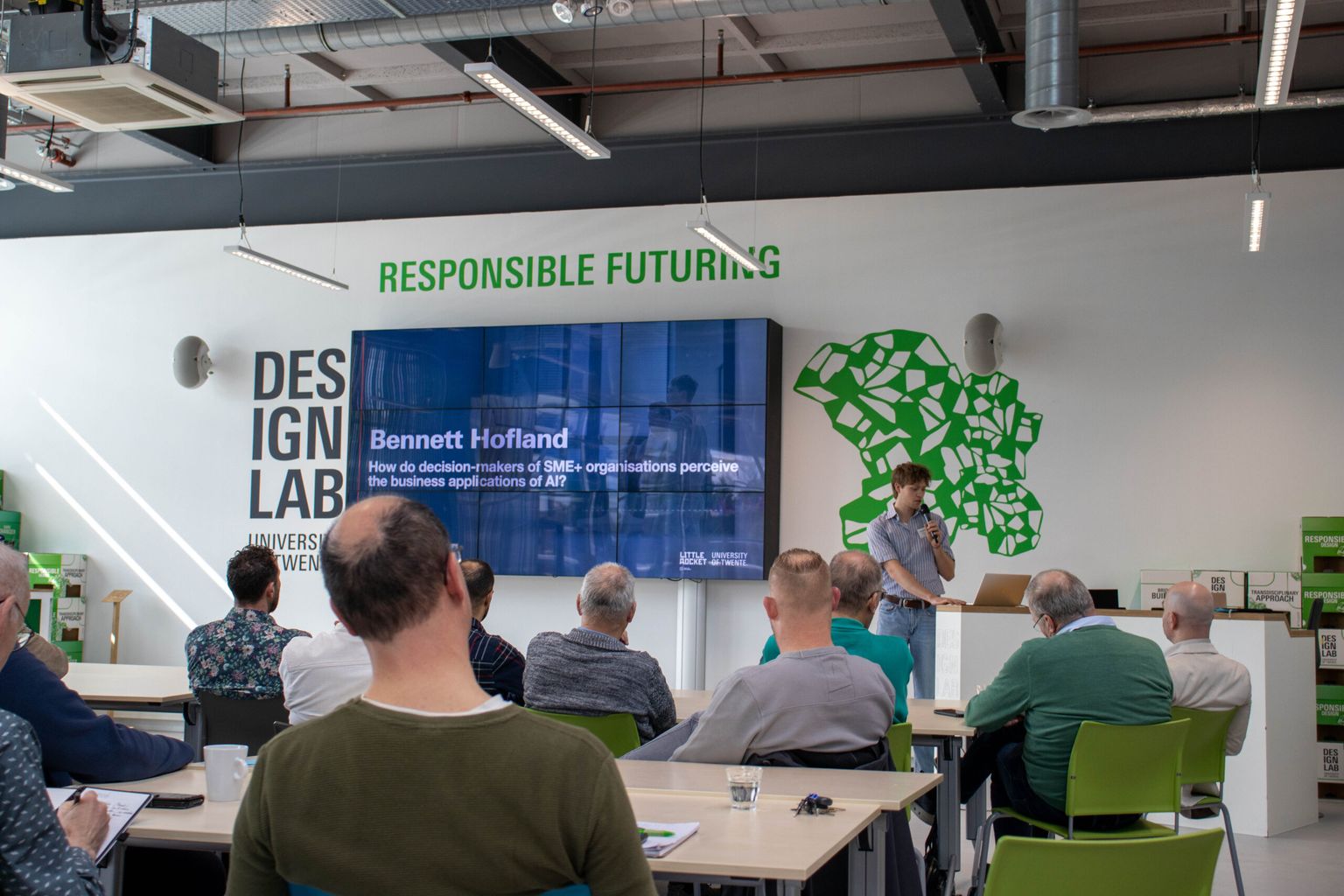
While Demcon Data Driven Solutions (DDDS) is already at the forefront of applying AI, this is not the case for all companies, as Bennet Hofland explained during his session. In his thesis research, he examined sentiment around AI within small and medium-sized enterprises (SMEs). He interviewed decision-makers and compared their views with existing academic literature. One key observation was that every advantage of AI immediately introduces a new challenge. For example, while AI can take over tasks and reduce costs, it also requires new investments in expertise. In this way, Bennet highlighted several inherent paradoxes. His conclusion: SMEs struggle to keep pace with larger companies when it comes to deploying AI effectively and efficiently.
Risks and Solutions for information security
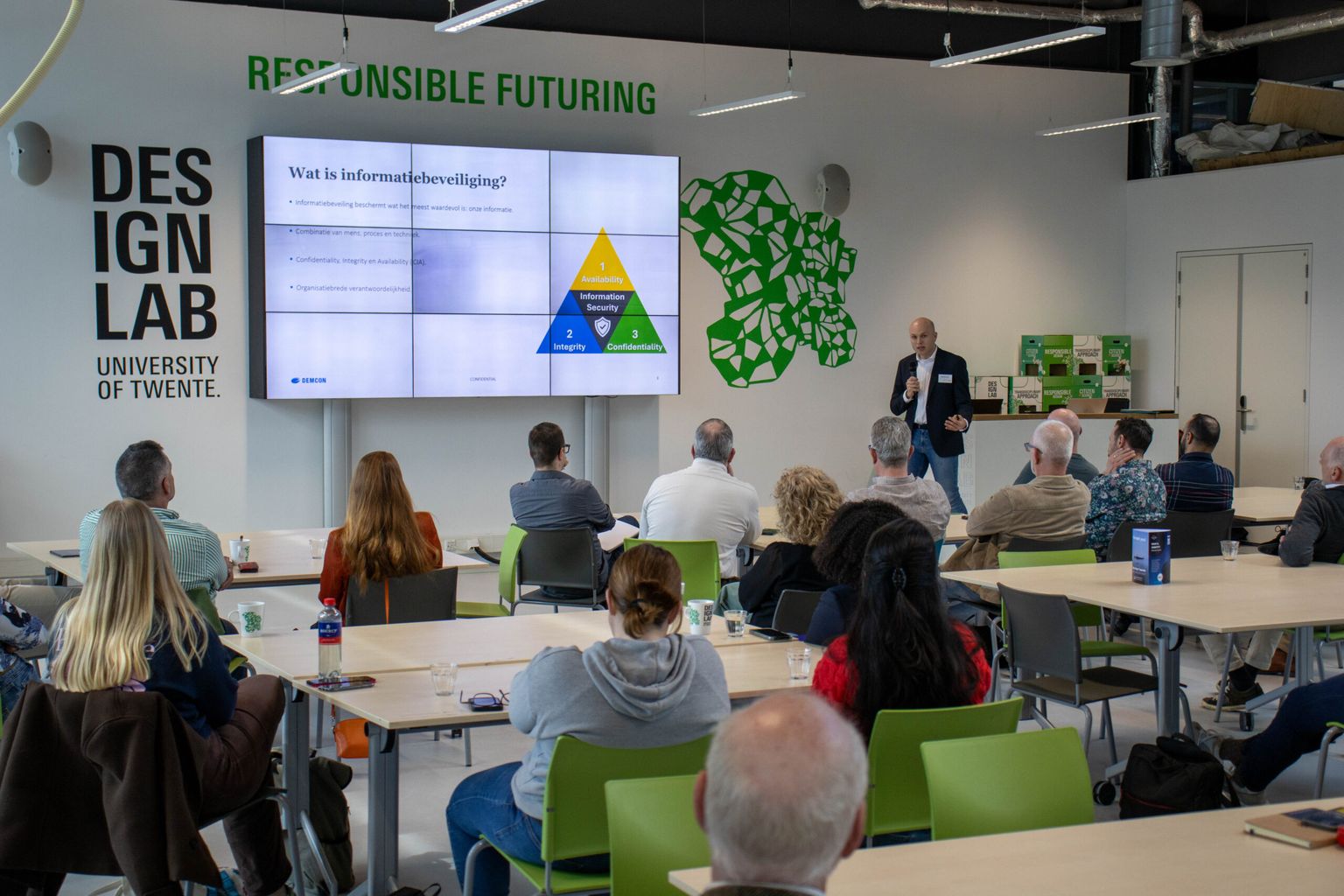
Larger organizations, such as Demcon, also face challenges related to AI. As Mart Moekotte explained, every new digital innovation can introduce risks to information security. Not only AI, but also rapid digitalization and developments in quantum computing bring new threats. All of these developments have the potential to compromise the availability, integrity, and confidentiality of digitally stored information. Fortunately, tools such as the Cybersecurity Act help organizations better prepare for and mitigate these risks.
Coffee break
After an energetic first half of the program, participants enthusiastically discussed their newly gained insights during the break. Refreshed and motivated, they then continued with the second part of the day.

Using the right relevant data for every decision
Matthijs Film shared his experiences within the police force, where the rapid and accurate sharing of information is crucial in critical situations. Behind the scenes, a dedicated team uses a wide range of data to support the right decision‑making. In his research, Matthijs focused on improving information provision to ensure that the most relevant data is used for each decision. As he aptly put it: “less screens, more insight.” A principle that is also extremely important in effective knowledge transfer.
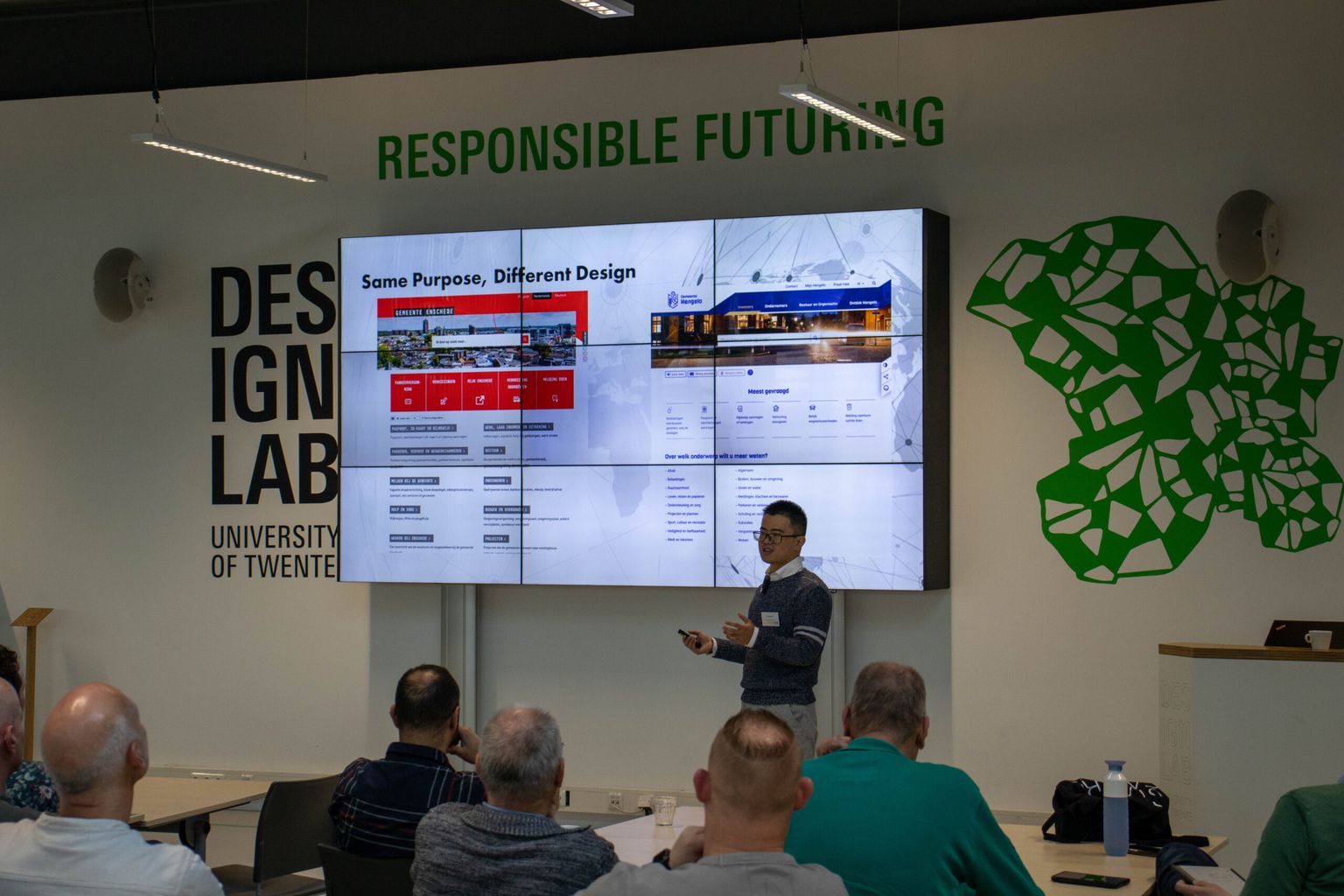
Website preferences remain the same regardless of cultural background
It is clear that the presentation of data plays an important role in critical decision-making. However, in our daily lives we also continuously navigate to, through, and from data. Yaxing Li presented his PhD research on differences between Western and Chinese municipal websites. He discussed visual and structural aspects such as color usage and navigation. Notably, participants from both cultural backgrounds ultimately expressed the same website preference: a clear and intuitive site that allows users to achieve their goal with as few actions as possible. This once again highlights a key lesson: clearly defining user context and user goals is essential for effective information transfer.
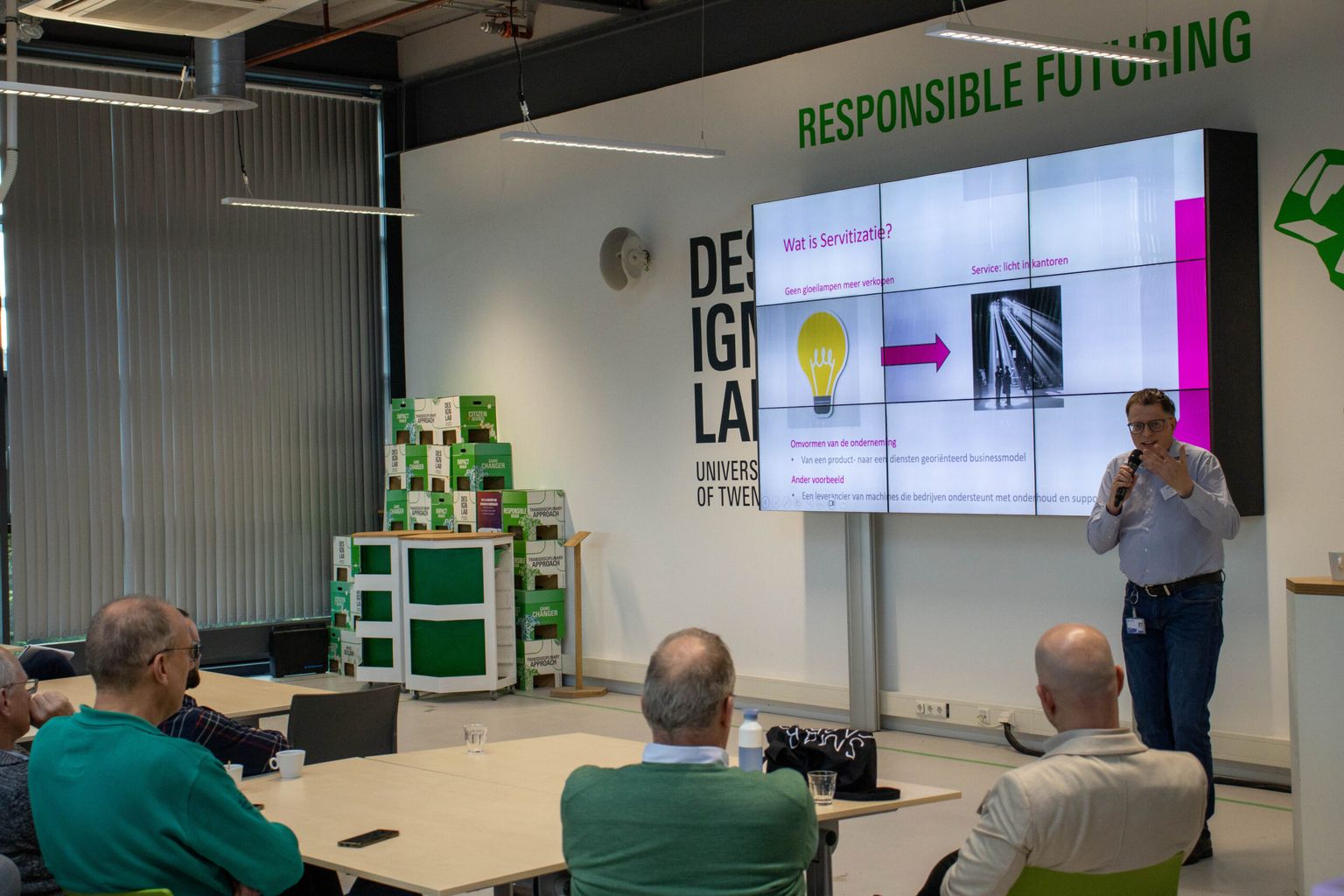
Productizing services
Jelte Meijer from Eluxis concluded the day with a presentation on servitization. Just like machines, services can be considered products that require their own development process. This includes making the service tangible, defining its value for the customer, and determining how it should be implemented within the organization. For each phase, various documents and templates are available to clearly define and structure the service product. Jelte emphasized that the service product should be involved in all phases of product development, for example through design for support: can a technician easily replace a component, or does the design make this practically impossible? Successful service development requires the involvement of all stakeholders throughout the entire product lifecycle.
Closing and see you next year at the Technical Communication Day
After six engaging presentations and closing remarks by Joyce Karreman, the fifth Technical Communication Day came to an end. There was, of course, time to continue conversations over drinks and refreshments. We would like to sincerely thank all speakers once again for their inspiring contributions. The day once again highlighted the importance of effective information transfer and communication—not only in high‑pressure situations, such as policing or the field of information security, but also in a business context and even in everyday scenarios such as simply browsing a website.

Would you like to ensure effective technical communication within your organization? Contact us to explore the possibilities together.
Warm regards, Floor Stefess
floor.stefess@eluxis.com
LinkedIn: Floor Stefess