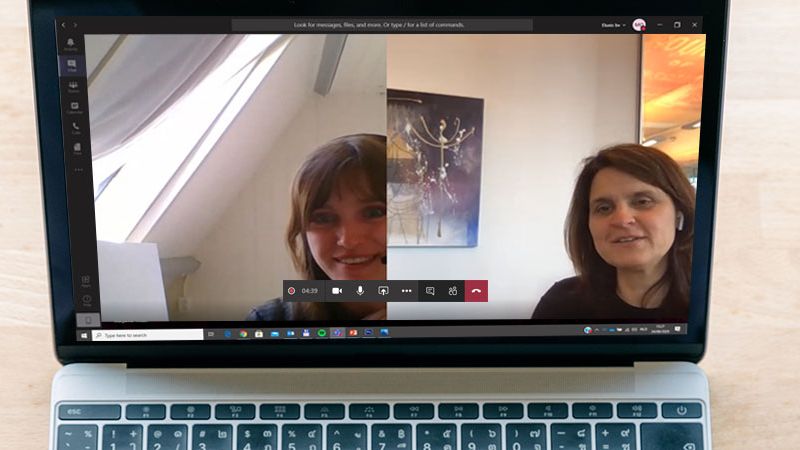
What does your company, Serious VR, do?
Serious VR develops Virtual Reality training and Virtual Reality assessments for the industrial sector. We offer two types of training:
Generic VR training (for example, training that complies with NEN3140)
Custom VR training (specific to a company’s primary processes)
Can VR replace all forms of training?
No, VR can primarily replace the practical component of training. For teaching theory, e‑learning or other formats are often more effective.
We see VR as one part of a broader training approach. During a full training day, you might start with theory, then complete the VR training, and afterwards have a discussion with a trainer or instructor for deeper understanding.
We sometimes have discussions with people who say, “Yes, but VR training can’t do this or that.” And then I say: “That’s correct.” We don’t believe VR can replace everything. It is truly an addition to the overall training offer.
When is VR particularly suitable?
VR is especially useful when: the training object or physical locations not available are or when real‑life training would be unsafe. These are the three main reasons to choose VR.
For example: if a machine is difficult to shut down, you don’t want to train on it. Or if a training scenario risks damaging a component that is hard to replace and could shut down the machine for weeks. When the consequences of mistakes are too severe, VR is ideal. VR is also excellent for topics related to safety, hygiene and occupational health.
Interactive VR training is especially suitable for shop‑floor training. Users are often unskilled or MBO‑level employees. That doesn’t mean HBO or university graduates can’t use VR — of course they can. But VR is not always the best choice for them. Everything you can easily simulate on a computer should simply be done on a computer.
When is the 3D effect valuable and why?
The 3D environment makes you truly feel present in the setting. People forget they are in a digital world. In the VR world, we call this immersiveness. Sometimes we design training where you start in one location and finish in another. When participants remove the headset, they are surprised they are not standing where they thought they were. People even try to lean on objects that aren’t really there. For example, we once had a professional snooker champion practicing in VR. He tried to pick up a ball and leaned on the virtual table — which, of course, wasn’t there. Even though he knew it wasn’t real, it felt so realistic that he instinctively leaned in. We see similar reactions in our VR trainings all the time.
We know each other from the E‑PLM project on AR and VR, where we developed best practices, including a checklist with instructional design principles for AR and VR. To what extent do you use this checklist?
We already applied some of those design principles, and others we now use more consciously. One example is ensuring audio supports the experience without distracting from it — we apply this much more explicitly now.
When designing a VR instruction, we make sure texts are active, brief and in the imperative form: grab this, do that. We often debate this with clients — they tend to want long explanations to be as complete as possible. But you should cover that theory outside VR, not in the VR environment.
We also notice how important proper educational design is — it’s a specialised domain and an essential one.
Do you have any additional insights?
VR is a new technology, and hardware is evolving quickly. What I always advise clients — although of course I’m biased — is to start with a pilot now. Learn how it works, how to apply it, and understand the organisational implications. Give people time to get used to it before scaling up. It’s better to start gradually.
Training is actually a very traditional field. Yes, e‑learning is relatively new, but training methods haven’t fundamentally changed in 50 years. It’s a conservative world. Most trainers are 50–55 years old; you rarely see 25‑year‑old trainers in the technical sector. This means you need to introduce innovations slowly and patiently. If people have one bad experience, it can take two years before they’re willing to try again. These are crucial considerations.
What is the difference between 360‑degree and (interactive) Virtual Reality training?
360‑degree environments
You are in a virtual environment, but you cannot interact with it. You can look around and move through it, but you cannot make changes.
Serious VR does not focus on this type of training.
(Interactive) Virtual Reality (VR) training
Here, you can take actions that change the digital world. For example, picking up a virtual object or triggering a response. All actions generate feedback.
Interactive VR training can be divided into:
VR instructions: First exposure to a new task or topic.
VR scenarios: Running through ideal and “error” scenarios — for example, a malfunction or missing tools. You learn by making mistakes in a safe virtual environment.
VR assessments: Performing a scenario while being evaluated. The system measures what mistakes are made and in which areas (e.g., safety or technical insight).
A big thank‑you to Marjo for this interview! For more information about Serious VR, visit https://serious-vr.com/.
Warm regards, Maaike Otten
m.otten@eluxis.com
Linkedin: Maaike Otten