
Not long ago, I bought a different car. Because we have a Japanese connection in the family, it had to be a car from that other country known for building excellent cars.
We visited several brands. Mazda was at the top of my list. From my younger years, I remembered a funny commercial with six bouncing gnomes representing the Mazda engine — a V6. Combined with a strong recommendation from someone I trust, it earned the brand first place.
Watch the YouTube video to see the commercial I mean. The quality is unfortunately poor, but a fun fact is that the filmmakers are well‑known, and the commercial can be found in the Dutch Institute for Sound and Vision archives.
In the showroom, something struck me: the way the salesperson told his story. Yes — a story.
He didn’t start with a list of models and prices. That came later.
Instead, he told the story of Mazda. The story of a small, unconventional Japanese brand that follows its own path.
Mazda doesn’t base its safety on a cage construction like many others do. Their foundation is a ring structure — the strongest form that exists. To illustrate it, he took the ring off his finger.
He also talked about the brand’s design principles. Mazda calls it Kodo design — the art of subtracting everything that isn’t essential for the user. You see it in the calm, balanced interior.

From my background in technical communication, I immediately recognized the principles of minimalism used for good documentation. It’s also about removing everything unnecessary and self‑evident so that only the essence remains.
And just like that, I found myself drawn into a story I felt connected to. Yes — that’s the car I chose.
Is storytelling only useful in sales? No. Whenever you need to explain something, transfer knowledge or introduce change in an organization, storytelling is crucial.
These days we call it storytelling. A slightly trendy term.
But telling stories to convey meaning is as old as humanity itself. Stories create emotion, images you remember, motivation, and action. That Mazda commercial with the gnomes is from 1991 and lasts only 34 seconds — yet the image has stayed with me for 29 years, with a positive association!
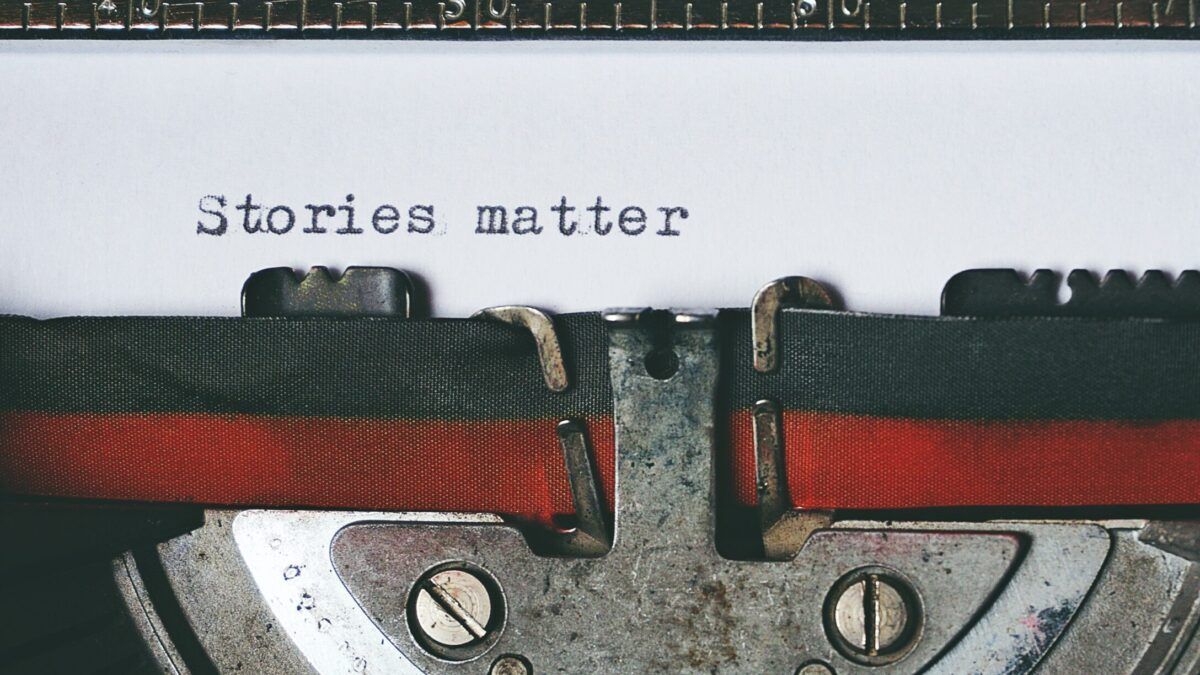
In the technical world, things are often explained using abstractions, diagrams, models, tables, and specifications. Technicians are used to analyzing, structuring, and schematizing. Nothing wrong with that. But emotion and motivation aren’t there.
So add a story — a narrative — when you want to motivate and convey a message that people will easily remember.
Are you interested in storytelling for knowledge transfer? In what makes a good story — and how to create one? If you schedule a meeting with me, I’d be happy to discuss it further.
A fun fact: the Japanese don’t say Mazda, but Matsuda. After buying the car, I received a cheerful message from Japan: “Matsuda good car!”
Warm regards, Peter van Bart
info@eluxis.com
Linkedin: Peter van Bart